
Dollar-Cost Averaging: The Investing Strategy That Removes the Guesswork

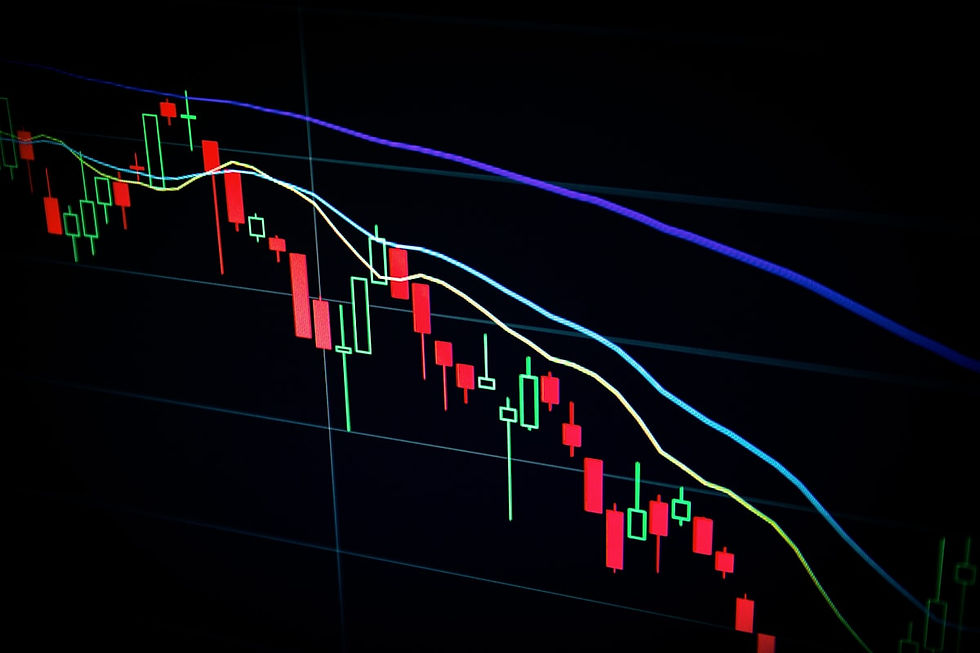
Have you ever tried to figure out the perfect moment to buy a stock? Maybe you waited for the price to drop, then it dropped more — so you waited again — and suddenly you never bought anything at all. This is called trying to "time the market," and even professional investors get it wrong.
There is a smarter, simpler approach — one that removes all that guesswork. It is called Dollar-Cost Averaging (DCA), and it might be the most beginner-friendly investing strategy ever created.
What Is Dollar-Cost Averaging?
Dollar-cost averaging simply means investing a fixed amount of money at regular intervals — regardless of what the market is doing. Instead of dumping all your money in at once, you spread it out over time.
For example: Instead of investing ₱5,000 all at once, you invest ₱500 every month for 10 months. Simple as that.
Why Does This Work?
The magic of DCA comes from how prices move. Stock prices go up and down constantly. When you invest the same amount each month, you automatically buy more shares when prices are low, and fewer shares when prices are high.
Here is a quick example:
Month 1: You invest ₱500. The share price is ₱50. You buy 10 shares.
Month 2: You invest ₱500. The share price drops to ₱25. You buy 20 shares.
Month 3: You invest ₱500. The share price rises to ₱100. You buy 5 shares.
After 3 months, you have invested ₱1,500 total and now own 35 shares. Your average cost per share is roughly ₱43 — even though prices ranged from ₱25 to ₱100. This is what investors mean when they talk about "averaging down" their cost. Because you kept buying during the low point, your overall average price is lower than if you had tried to time the market perfectly.
The Real Enemy: Emotional Investing
One of the biggest mistakes new investors make is letting their emotions drive their decisions. When prices are rising fast, fear of missing out pushes people to buy at the peak. When prices crash, panic makes people sell at the lowest point. Both are the opposite of what you should do.
DCA short-circuits this emotional cycle. Since you are investing automatically on a fixed schedule, you do not have to decide whether "now is a good time." You just keep investing. The strategy takes the stress out of the equation.
How Teens Can Use This Strategy
You do not need a lot of money to start. Here is a simple plan:
Pick an investment — this could be an index fund, a stock you believe in, or an ETF (a basket of many stocks).
Set a fixed amount — even ₱100 to ₱500 per month is a great start.
Pick a day — the 1st or 15th of every month works well.
Stick to it — do not stop just because the market goes down. A price drop is actually an opportunity to buy more shares at a discount.
DCA vs. Lump-Sum Investing
Some people prefer to invest all their money at once — this is called lump-sum investing. Research suggests that in a rising market, lump-sum investing often outperforms DCA in terms of total returns, because your money spends more time invested.
However, for most teenagers — who are learning, working with limited funds, and building habits — DCA wins on a different level: consistency and confidence. It teaches you to invest regularly, stay calm during market dips, and build wealth gradually without the pressure of picking the "perfect" entry point.
The Bottom Line
Dollar-cost averaging is not a get-rich-quick trick. It is a disciplined, patient approach to building wealth over time. By investing the same amount on a regular schedule, you take the guesswork out of investing, reduce the impact of market swings, and develop one of the most powerful financial habits a young person can build.
Start small, stay consistent, and let time do the heavy lifting.


Comments